
How Do I Know Which RV Type Is Right for Me?
There is no single best RV. Anybody who tells you otherwise is selling you the one they need to move off the lot this month.
That is cold comfort when you are staring at six categories you cannot tell apart. Class A, Class C, fifth wheel, toy hauler. The words blur and the prices swing by six figures. So how do I know which RV type is right for me? You work backward from your life. That is the order we walk buyers through at International RV World, and it is what this RV buying guide does here.
Five things decide it. How you travel. Who comes along. What sits in your driveway. What a full year of ownership costs. And what you are honestly willing to tow, drive, and park. Answer those and the question of which RV should I buy stops feeling like a coin flip.
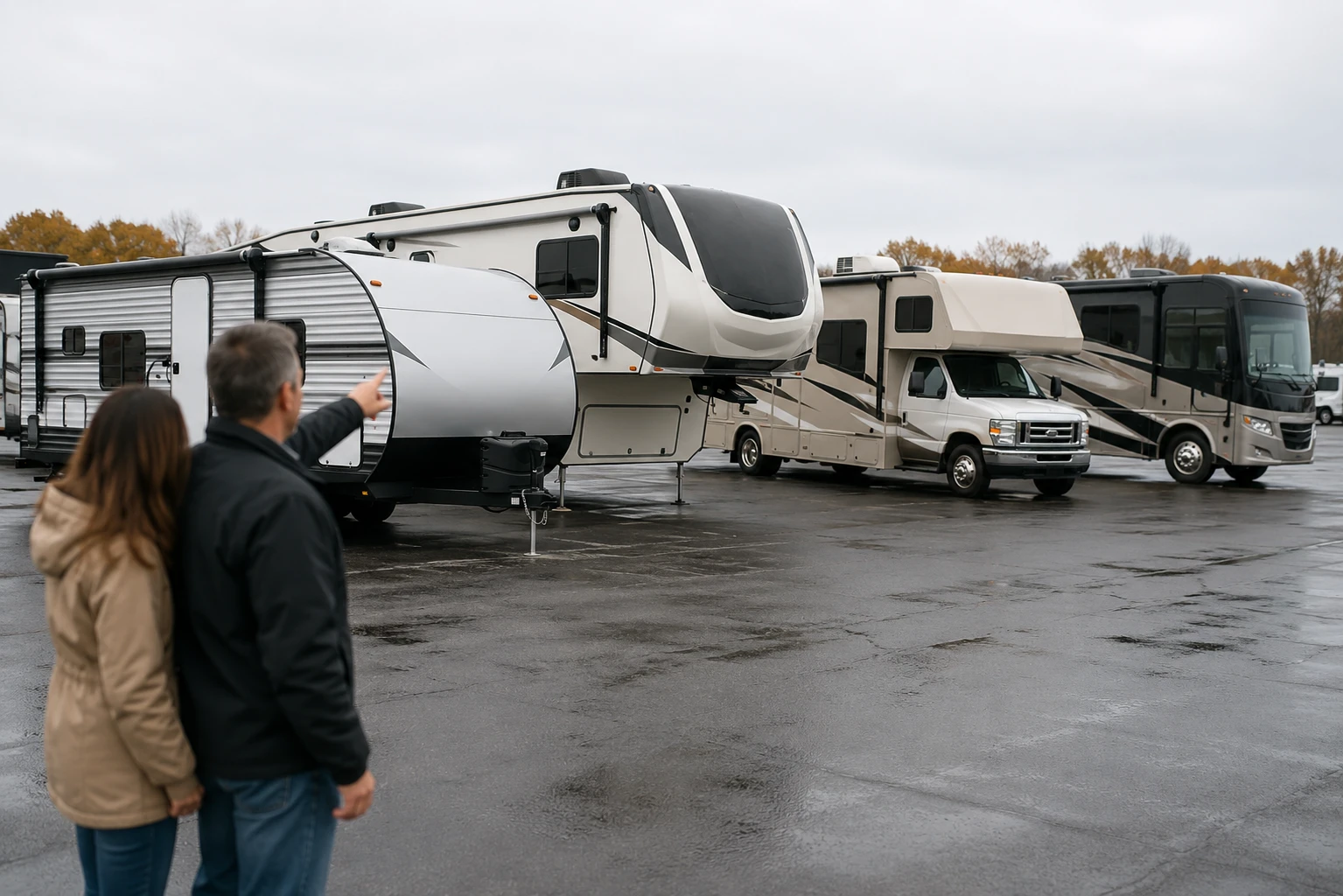
RV buyer comparing different types of RVs at a dealership
Start With How You Plan to Travel
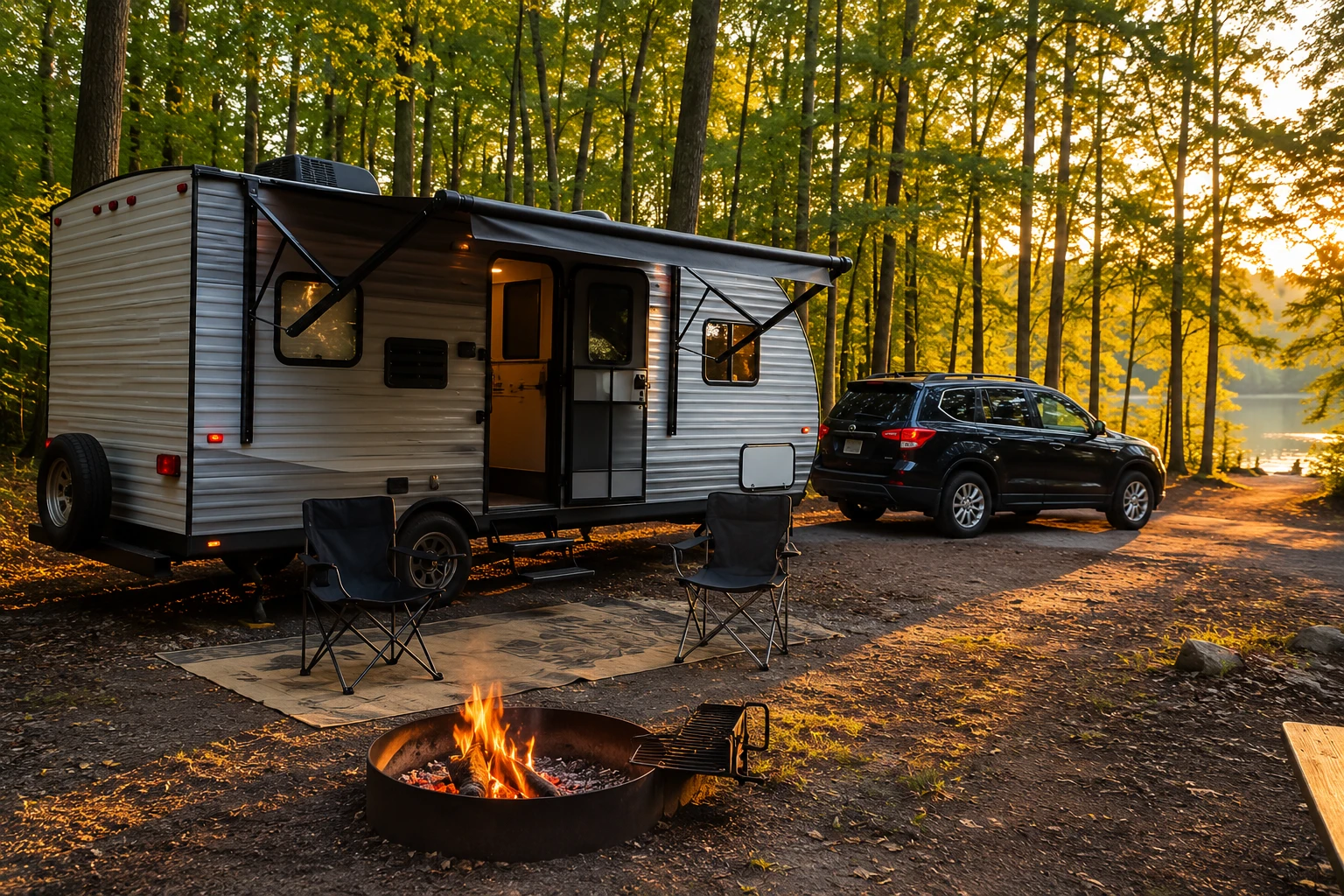
Skip the floor plans for now. What do your trips usually look like? Most folks picture the big cross-country haul, when what they really do is drive two hours on a Friday and come home Sunday.
Weekend campers
Weekend campers stay close. Two nights, a state park an hour out, home Sunday. Setup speed beats square footage, and a travel trailer under 30 feet does this beautifully.
Road trippers
Road trippers move every couple of days. Hitching and unhitching gets old fast, so a motorhome earns its keep.
Destination campers
Destination campers park once and stay a week. Space wins over agility. Fifth wheels and Class A coaches were built for it.
Seasonal campers
Seasonal campers book the same site from May to October. Comfort beats mobility, because the rig barely moves once it is set.
Full-timers
Full-timers live in it. That changes what matters (insulation, tanks, storage, build quality) more than it changes the floor plan.
Off-grid campers
Off-grid campers need tank capacity, solar, and a rig short enough to reach the good spots. Most big rigs never get there.
Figuring out what RV fits my lifestyle starts right here. Get honest about the trip you take and half the catalog disappears. Most guides on how to choose an RV skip straight to the types instead. Backward.
Consider Who Travels With You
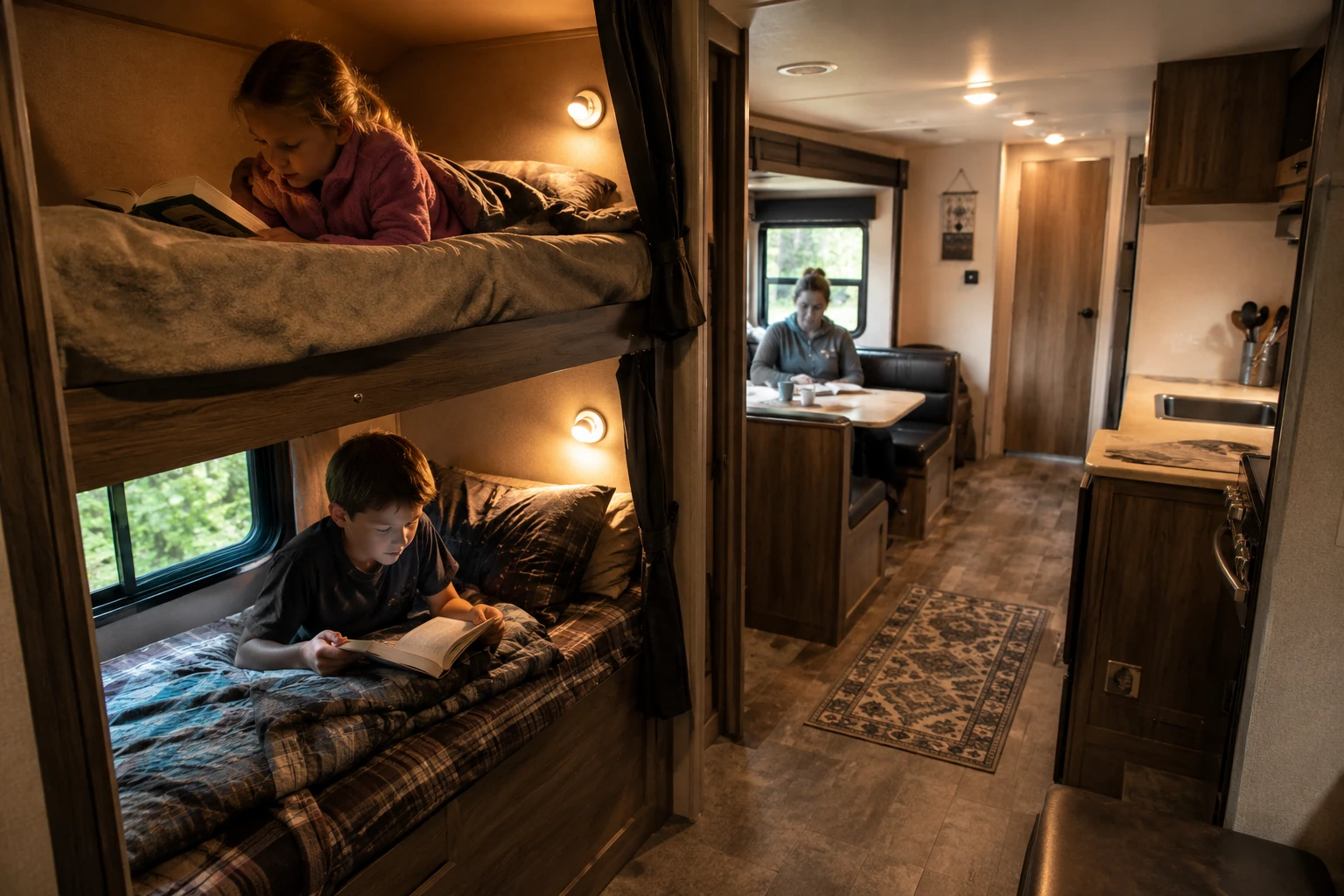
Now count heads. Then count them again, honestly.
First-timers shop for the biggest crowd they can imagine. The grandkids, the friends who said they might come. Then they camp as a couple ninety percent of the time, hauling four bunks nobody sleeps in. Buy for your regular crew. Guests can bring a tent.
Solo or a couple
Class B camper van or a lightweight travel trailer. Cheap to run, quick to set up.
Family with kids
Bunkhouse travel trailer, fifth wheel, or Class C. You want a second sleeping zone.
Pet owners
Floor space near the door, and a rig that holds temperature while you are out on a hike.
Multi-generational
Fifth wheel or Class A. Two real sleeping areas, ideally two doors.
One thing people forget. If you tow, everybody rides in the tow vehicle, and a family of six behind a five-seat truck has a problem no floor plan solves. Knowing how to choose the right camper means checking the seats up front too.
Towable or Motorized? Types of RVs Explained
Here is the fork in the road. Everything branches off it.
A towable is a trailer you pull, and you unhitch at the campsite so your vehicle is free again. A motorized RV drives itself, so setup is faster, though a grocery run means packing up or towing a small car behind you.
Travel trailer
$20k to $50k
- Ease of driving: Easy to pull, trickier to back
- Living space: Small to large
- Storage: Decent
- Tow vehicle: SUV to half-ton
- Maintenance: Lowest. No engine
Fifth wheel
$50k to $120k
- Ease of driving: Very stable
- Living space: Largest towable
- Storage: Excellent
- Tow vehicle: Three-quarter ton or bigger
- Maintenance: Low. No engine
Toy hauler
$40k to $100k+
- Ease of driving: Heavy. Plan the route
- Living space: Good, plus a garage
- Storage: Excellent
- Tow vehicle: Heavy truck
- Maintenance: Low, but the ramp takes abuse
Class A
$100k and up
- Ease of driving: Big. Takes practice
- Living space: Largest overall
- Storage: Huge bays
- Tow vehicle: None (may tow a car)
- Maintenance: Highest. Engine plus house
Class B
$80k to $150k
- Ease of driving: Drives like a tall van
- Living space: Smallest
- Storage: Very limited
- Tow vehicle: None
- Maintenance: Moderate
Class C
$70k to $130k
- Ease of driving: Manageable for most
- Living space: Solid middle
- Storage: Good
- Tow vehicle: None
- Maintenance: Moderate to high
NOTE. Ballpark ranges only. Prices move with the market and with whatever’s optioned on the unit.
With the types of RVs explained side by side, the pattern shows up. Towables give you more room per dollar and no second engine to maintain. Motorhomes cost more to buy and more to keep running, and they buy back your travel days. Neither wins in the abstract. It depends on how often you move.
Think About Your Tow Vehicle
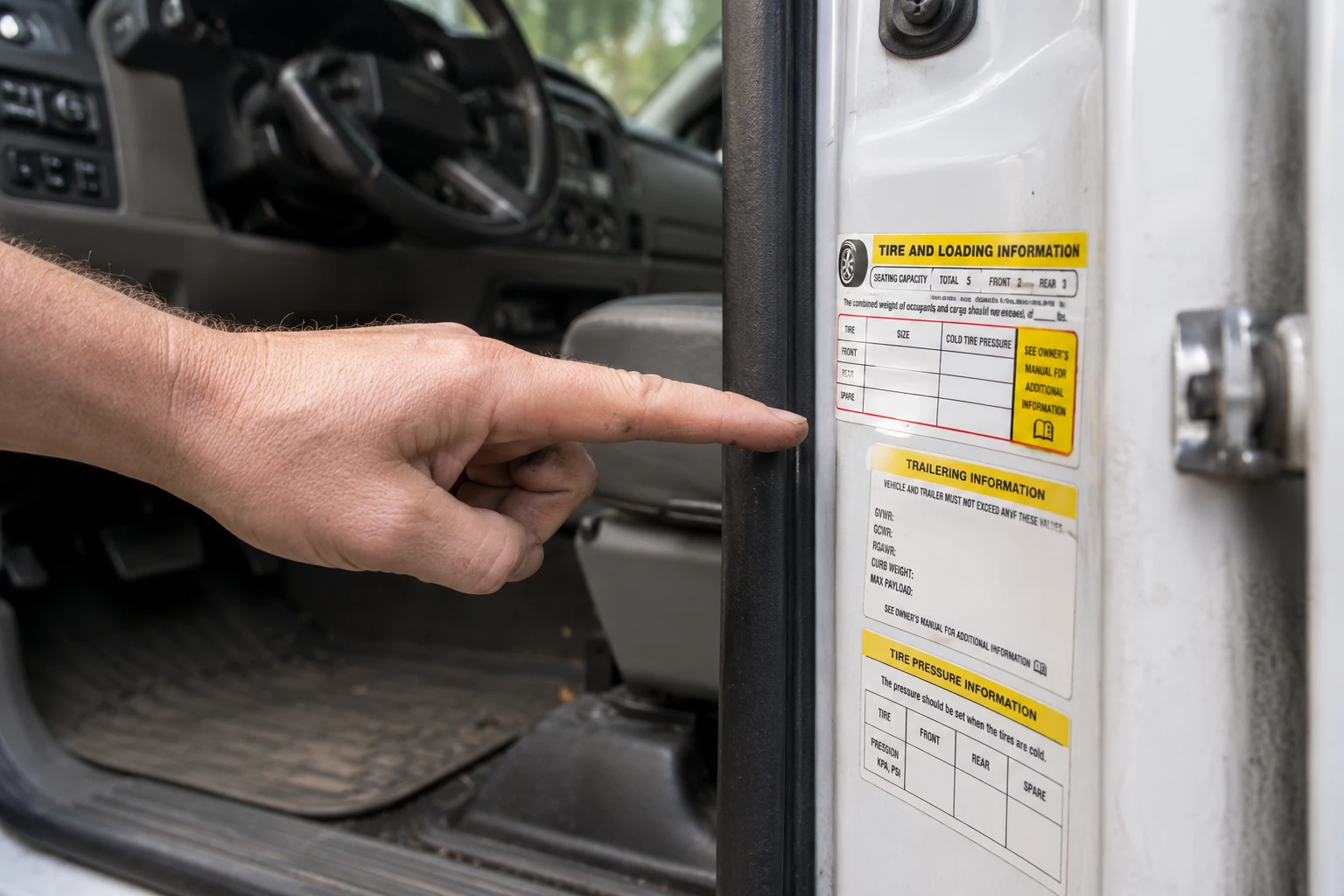
This is where good buys go wrong (read it twice).
Most buyers already own something. A half-ton pickup, a big SUV, a minivan. The instinct is to check the tow rating, see a comfortable number, and start shopping. Trouble is, the tow rating is rarely the limit you hit first.
Payload is. Think of payload as your vehicle’s carrying budget, and the trailer’s hitch weight is the first thing that spends it. On a typical loaded trailer, expect roughly an eighth of its total weight to press straight down on the hitch. Call it 900 pounds on a 7,000-pound rig. That comes off your budget before the passengers, the cooler, the dog, and the firewood do. So a truck with a tow rating you feel great about can still be over its carrying limit sitting in the driveway. The yellow sticker inside the driver’s door gives you the honest figure.
Midsize SUV or minivan?
Lightweight travel trailers, roughly 3,500 pounds loaded and under. Also the easiest camper to tow when you are new to it.
Half-ton truck?
Single-axle and lighter double-axle trailers sit comfortably in range. Big bunkhouse trailers usually do not, once loaded.
Three-quarter ton or bigger?
Fifth wheels open up. They pull more steadily than a trailer of the same length, since the weight rides over your rear axle instead of hanging off the bumper.
Nothing you want to tow with?
A motorhome sidesteps the question. A Class B is the easiest RV to drive of the motorized bunch, because it parks in a normal spot. A Class C is next, and it sleeps a family.
We run this math with buyers every week, free. If the numbers say your truck is a floor plan too small, better you hear it here than on I-75 in August.
Match Your RV to Your Budget
The window price is just the start of what an RV costs you. Insurance shows up every year whether you camp or not. Fuel matters more than people expect, especially with a Class A pulling 8 mpg on the highway. You’ll pay to store it if it won’t fit at home, and you’ll pay to keep it running once things start to wear. Campground fees add up over a season too. Then there’s the gear nobody warns you about. A hitch, a surge protector, leveling blocks, and hoses can run you a few hundred dollars before your first night out.
Michigan adds one more. A rig that sits outside from November to April has to be winterized right, and our service department sees what happens when it is not.
Trading up? Value your trade-in first, because it moves the math more than people expect. And our finance department can pre-approve you, which turns a vague budget into a firm ceiling.
The trap is chasing the lowest monthly payment, since stretching a loan long enough makes the payment comfortable while the total cost climbs by thousands.
So How Do I Know Which RV Type Is Right for Me?
Here is the shortcut.
| If you are… | Start with… | Why |
|---|---|---|
| A weekend camper | Travel trailer | Cheapest way in, easy setup, tows behind what many people already own |
| A couple | Lightweight trailer or Class B | Right-sized, cheap to run, simple to park |
| A family with kids | Fifth wheel or Class C | Bunks, a second living zone, room to spread out |
| An adventure traveler | Toy hauler | The garage carries the bikes, the kayaks, the golf cart |
| A full-time RVer | Fifth wheel or Class A | The best RV for full-time living is built for months, not weekends |
| A frequent road tripper | Class B or Class C | No hitching. Pull over, sleep, go |
| A first-time buyer | Lightweight travel trailer | The best RV for beginners is almost always smaller than the one they wanted |
That last row is the one people argue with. Stay with me.
The best RV for full-time living really is a big rig. Months on the road need storage, tank capacity, and four-season insulation, and a fifth wheel or Class A delivers all three. But full-timers make up maybe one buyer in twenty. The rest are out a handful of weekends a season. Forty feet of trailer is a heavy thing to justify for a couple and a dog who camp in June and August. The best RV for beginners is usually whatever they can already pull.
Questions to Ask Yourself Before Buying
Screenshot this. The whole choosing an RV checklist runs six lines.
-
01
How many nights a year will I really use it?
-
02
Do I own a tow vehicle, and what is its payload?
-
03
Who rides along most often, and where do they sleep?
-
04
Luxury, or simple?
-
05
Where does it live in the off-season?
-
06
What is the total yearly cost, not the monthly payment?
Answer those honestly and the category picks itself. Any choosing an RV checklist longer than that is padding.
Common Mistakes First-Time Buyers Make
Every first-time RV buyer guide lists mistakes. Most are polite. These are the ones we watch people actually make.
Buying too much RV.
The most common one by a mile. Bigger feels safer, and a 38-foot trailer looks incredible parked under the lights at an RV show.
Ignoring payload.
Worth the repeat. Tow rating is not the number that stops you.
Falling for the floor plan.
People pick the layout they loved on a Sunday walkthrough, then find the rig runs 34 feet and half the state parks they like cap sites at 30.
Forgetting storage.
Where does it sleep in January? A storage lot around here costs real money, and plenty of neighborhoods will not let it sit in the driveway.
Shopping on price alone.
The cheapest rig on the lot is sometimes cheap for a reason.
Skipping the campground homework.
Length limits, age limits at private parks, and hookup amperage quietly rule out rigs people have already fallen for. A good first-time RV buyer guide says that out loud.
How International RV World Can Help
Come tell us how you camp. That is the whole pitch.
We will ask about your trips, your crew, and what is parked in your driveway, then point you at a category that fits. We will run the payload math before you get attached to anything. We can sort financing, fold in your trade, and walk you through the rigs on the lot, because a floor plan on a screen tells you almost nothing about whether you will live in it happily.
And if the honest answer is that you are a truck upgrade away, or a floor plan smaller than you hoped, we will say so. Which RV type is right for me is a question worth getting right once, rather than trading out of a mistake in two seasons.
Come talk through your options, and you will leave knowing which type is yours.
Contact Us